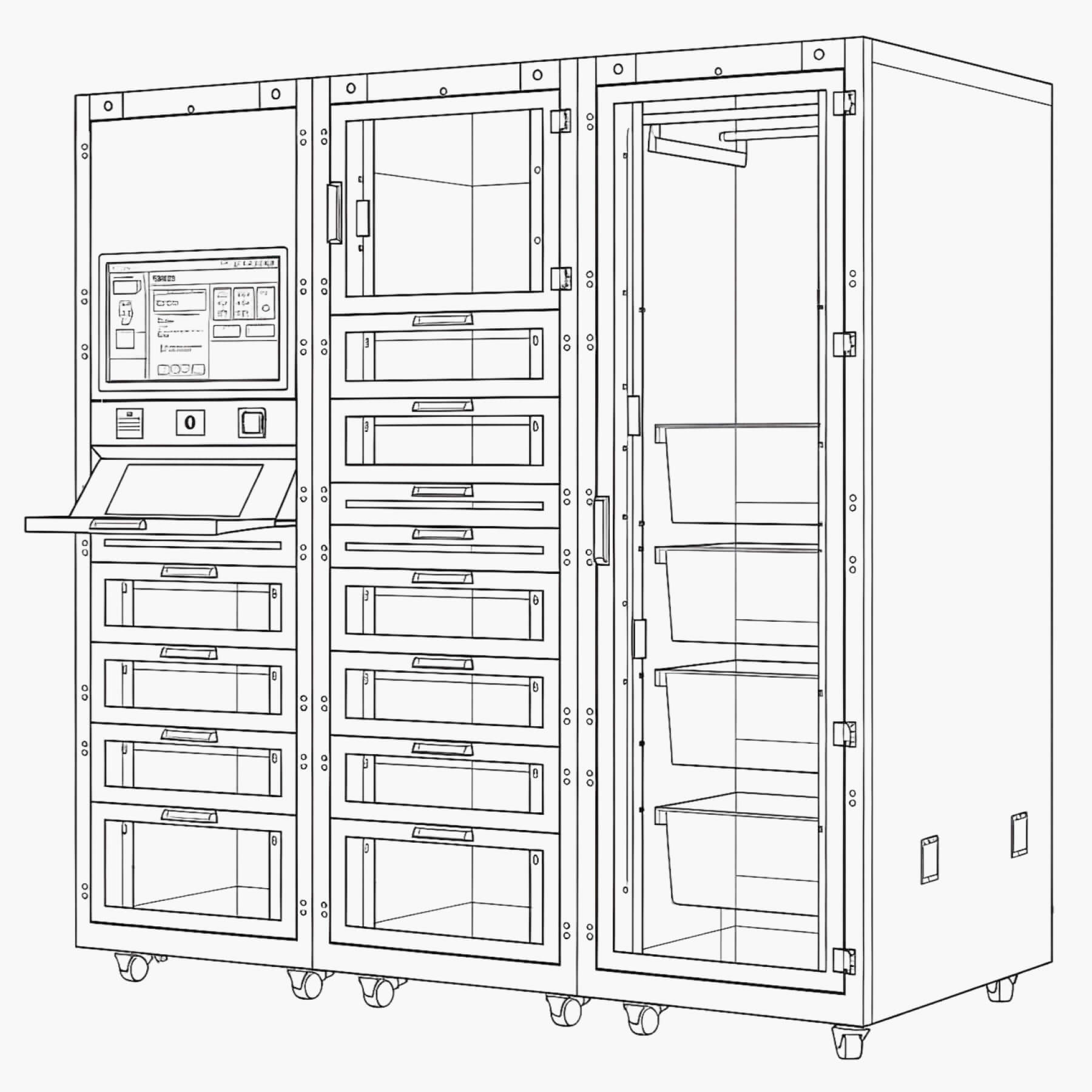
Best Practices for Deploying an Automated Ward First Aid Kit (ADC) System in a Hospital Unit

Deployment of the Automated Branch First Aid Kit (ADC) Automated Dispensing Cabinet) is an important step towards improving patient safety and staff efficiency. However, in order to use the full potential of such a solution, a correct and well-planned implementation is necessary.
Even the best technology will not bring the expected results if the implementation process is random or does not take into account the realities of the hospital's work. Studies show that properly implemented ADC systems can reduce drug delivery errors by up to 50%, as well as improve compliance of pharmaceutical processes (Trivedi et al., BMJ Open Quality, 2022; Chapuis et al., European Journal of Hospital Pharmacy, 2019).
Below we present the best practices that will help in the efficient and effective implementation of the automatic ward medicine cabinet system in the ward.
1. The importance of a well-planned implementation
A well-executed ADC implementation is not just a technical issue — it is an organizational change. It includes work processes, personnel responsibility and even a safety culture. Deployment without preparation can lead to frustration, user resistance and misuse of equipment.
Best practice:
Before starting a project, it is useful to carry out a branch needs analysis, that is, to identify what problems the ADC is supposed to solve (e.g. medication errors, losses, lack of inventory control) and how the system will fit into existing procedures.
According to a report by the Institute for Safe Medication Practices (ISMP, 2020), one of the key success factors in the implementation of ADC systems is the involvement of end users already at the planning stage of the project.
2. Hardware and software configuration
Each department has its own specifics: other groups of drugs, access levels, working hours and document flows. Therefore, the key stage of implementation is the proper configuration of hardware and software.
Best practice:
- Adapt the structure of drawers and compartments for the most commonly used drugs.
- Define user roles and authorization levels (e.g. nurse, pharmacist, doctor).
- Set up integration with pharmacy and EHR systems to keep your medication data always up to date.
- Test the communication between systems and make sure the reports are readable to users.
Research shows that customizing the ADC configuration to the needs of a given branch increases utilization efficiency and staff satisfaction by more than 30% (Lai et al., Journal of Pharmaceutical Health Services Research, 2021).
Hint:
The UnitBox system allows flexible configuration of both hardware and software, so it can be adapted to the needs of each hospital department.
3. Staff training
The most common reason for problems after implementation is insufficient training of users. Even an intuitive system requires basic preparation, especially with regard to safety procedures and emergency handling.
Best practice:
- Organize training for all user groups (nurses, pharmacists, IT service).
- Make sure everyone knows how to collect, return, and report medication.
- Develop short job instructions or training videos.
- Appoint so-called “superusers” who will support colleagues in the branch after implementation.
4. Testing and pilot phase
Before the ADC becomes fully operational, it is worth conducting a pilot, that is, a test deployment in a single branch or on a limited scale.
Best practice:
- Test common scenarios: drug download, return, no access, system failure.
- Collect feedback from users and make adjustments to the configuration.
- Evaluate whether integration with other systems works smoothly and without lags.
From the experiences of hospitals cited in American Journal of Health-System Pharmacy shows that the pilot phase reduces the number of problems after full implementation by more than 40% (Fox et al., AJHP, 2019).
The pilot phase avoids problems when deploying on a larger scale and increases staff acceptance.
5. System startup
The proper commissioning of the ADC system should be well planned and supported by the technical team and a representative of the supplier.
Best practice:
- Plan for off-peak or weekend deployment.
- Ensure the presence of a person responsible for user support.
- After implementation, enable system monitoring (logs, error reports, alerts).
- Regularly verify the correctness of inventory.
6. Actions after implementation
The implementation does not end on the day of launch. Continuous monitoring and improvement of processes is crucial.
Best practice:
- Analyze usage and error reports.
- Deploy software updates and security fixes.
- Organize recurring refresher training.
- Collect user suggestions and customize system configuration.
The UnitBox system allows remote monitoring and analysis of data, which facilitates the ongoing improvement of ADC work.
7. Common pitfalls and how to avoid them
- Deployment too fast without testing → risk of errors and frustration of staff.
- Lack of training → erroneous operations and a decrease in trust in the system.
- Bad role configuration → too wide access or restrictions at work.
- Lack of integration with the pharmacy system → inconsistent inventory data.
How to avoid this:
Implementation should be carried out in stages, with active technical support and open communication with users.
Conclusions
An automated branch medicine cabinet system is an investment that brings tangible benefits, such as increased patient safety, reduced medication losses, and staff time savings. However, success is determined not only by technology, but by the way it is implemented. Good planning, training and analysis of the effects are the key to fully exploiting the potential of a solution like UnitBox.
Next steps
Are you planning to implement automated ward first aid kits in your hospital? Contact the UnitBox team to discuss your facility's needs and plan a step-by-step implementation process.